
Te Tohu a Te Roopu Hokowhitu:
TE MĀRA O MATANGI
Nā Reweti Arapere
Te Māra o Matangi or ‘the garden of Matangi’ was designed by Reweti Arapere. It uses the name of that early explorer to unite the marae of Te Roopu Hokowhitu.
On his journeys, Matangi named many land marks throughout the Manawatū and Rangitīkei, including Aorangi, Whakamoetakapū, Tokorangi and Waitapu. “Ngā tapuae a Matangi’ - the footsteps of Matangi connect the marae across the whenua that he traversed.
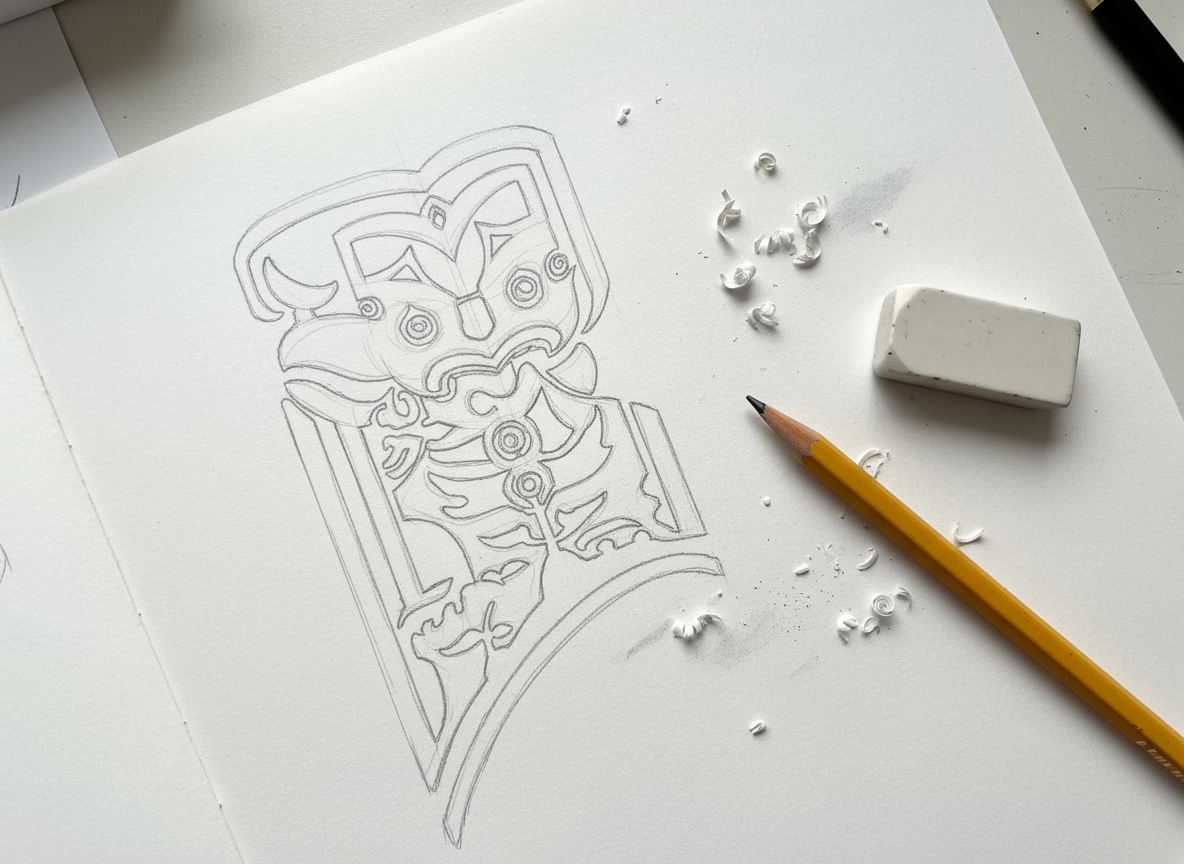
He Māra, He Ōhanga
– Cultivation, Care, and Prosperity
By bringing celestial guidance (kauwae runga) into conversation with everyday mahi, the kōrero re-indigenises economic aspiration. Wealth is not an end in itself, but a means of fulfilling our obligations to ngā uri whakatupu. The design also connects to wider kaupapa inherited from our tūpuna: the seed sown from Rangiātea, the kete rokiroki of our kuia Whakaotirangi, and the seven circles representing both the seven marae and the guiding stars of Matariki.
The image is that of a gardener, drawing attention to Rongomātāne, the atua of cultivated food. The gardener tills the soil, symbolising toil, potential, and the enduring relationship between people and whenua. Just as our tūpuna laboured with the kō to soften the earth, sow purapura, and tend the māra to sustain their communities, so too does Te Roopu Hokowhitu seek to grow prosperity in ways that uphold both our people and our values. Mā tāu rourou, mā tāku rourou—through collective effort, our people are sustained.
The gardener stands atop a mound, a kūmara plant set in front, driving a kō into the earth to loosen and turn the soil in preparation for planting. This imagery reminds us that the natural environment, the whenua, is our first source of wealth. Above the kō rests the crescent moon, aligning the design with the maramataka and the seasonal rhythms of abundance and scarcity. These elements reflect how economic cycles, like natural ones, are shaped by timing, care, and balance.
The central kūmara represents the desired outcome - growth, harvest, and productivity, Together, the turning of the soil, the storage of kūmara for winter, and the ongoing need to protect and replenish the māra reinforce the understanding that prosperity arises from careful stewardship, collective responsibility, and intergenerational planning.