

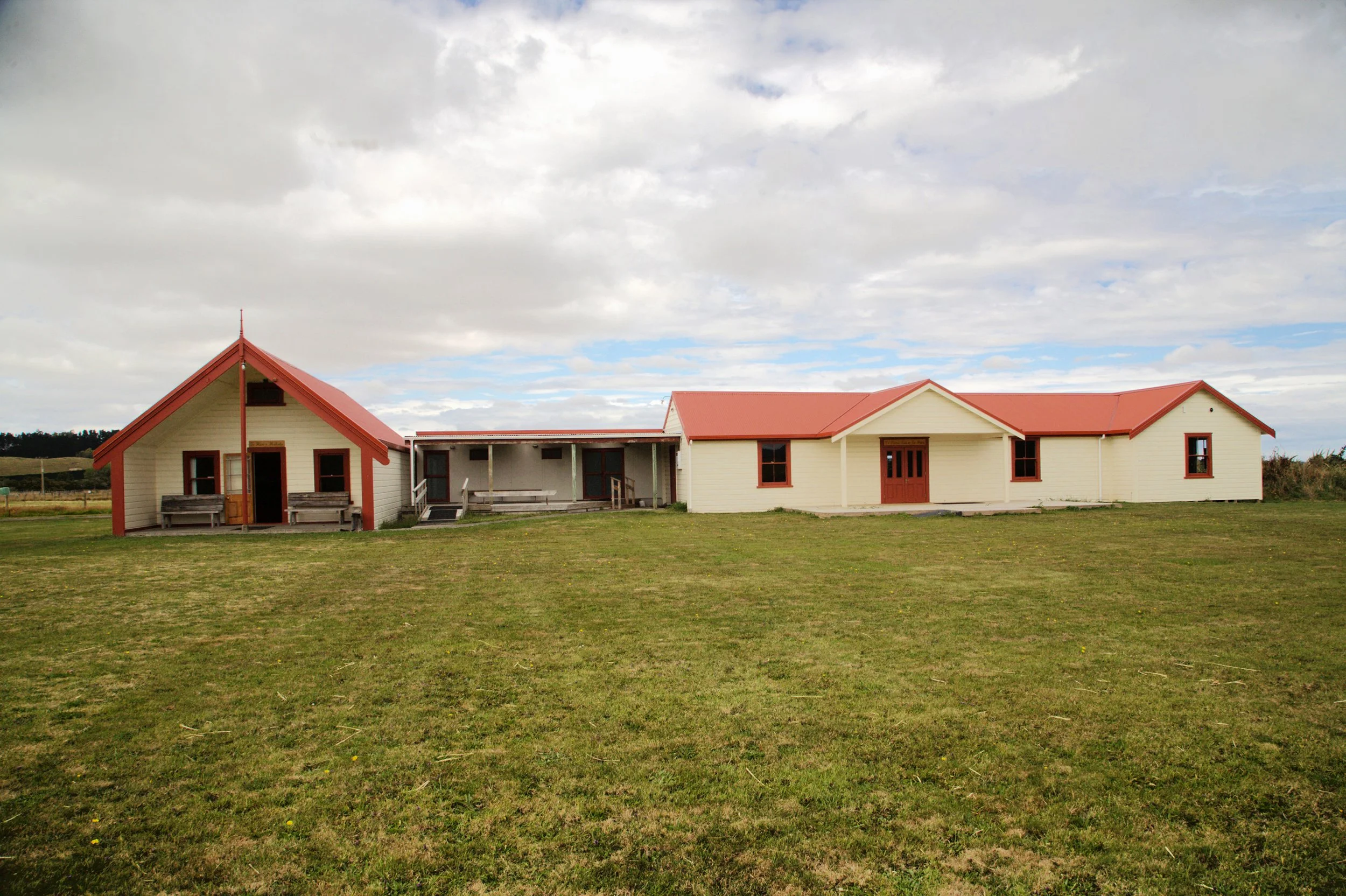
Te Hiiri
112 Pryces Line, Halcombe,
Manawatu-Wanganui 4779

Ko Tainui te waka,
ko Hoturoa te tangata,
ko Ruahine te pae maunga,
ko Rangitĩkei te awa,
ko Kākāriki te whenua,
ko Te Hiiri te marae,
ko Te Hiiri-a-Mahuta te wharepuni,
ko Ngāti Rangatahi/Matakore ngā hapū,
ko Ngāti Maniapoto te iwi,
ko Hāto Hōhepa te whare karakia,
Tīhei Mauri Ora!
Tainui is the canoe,
Hoturoa is the man,
Ruahine is the mountain range,
Rangitĩkei is the river,
Kākāriki is the land,
Te Hiiri is the marae,
Te Hiiri-a-Mahuta is the meeting house,
Ngāti Rangatahi/Matakore are the subtribe,
Ngāti Maniapoto is the tribe,
St. Joseph’s is the church,
Behold the Breath of Life!
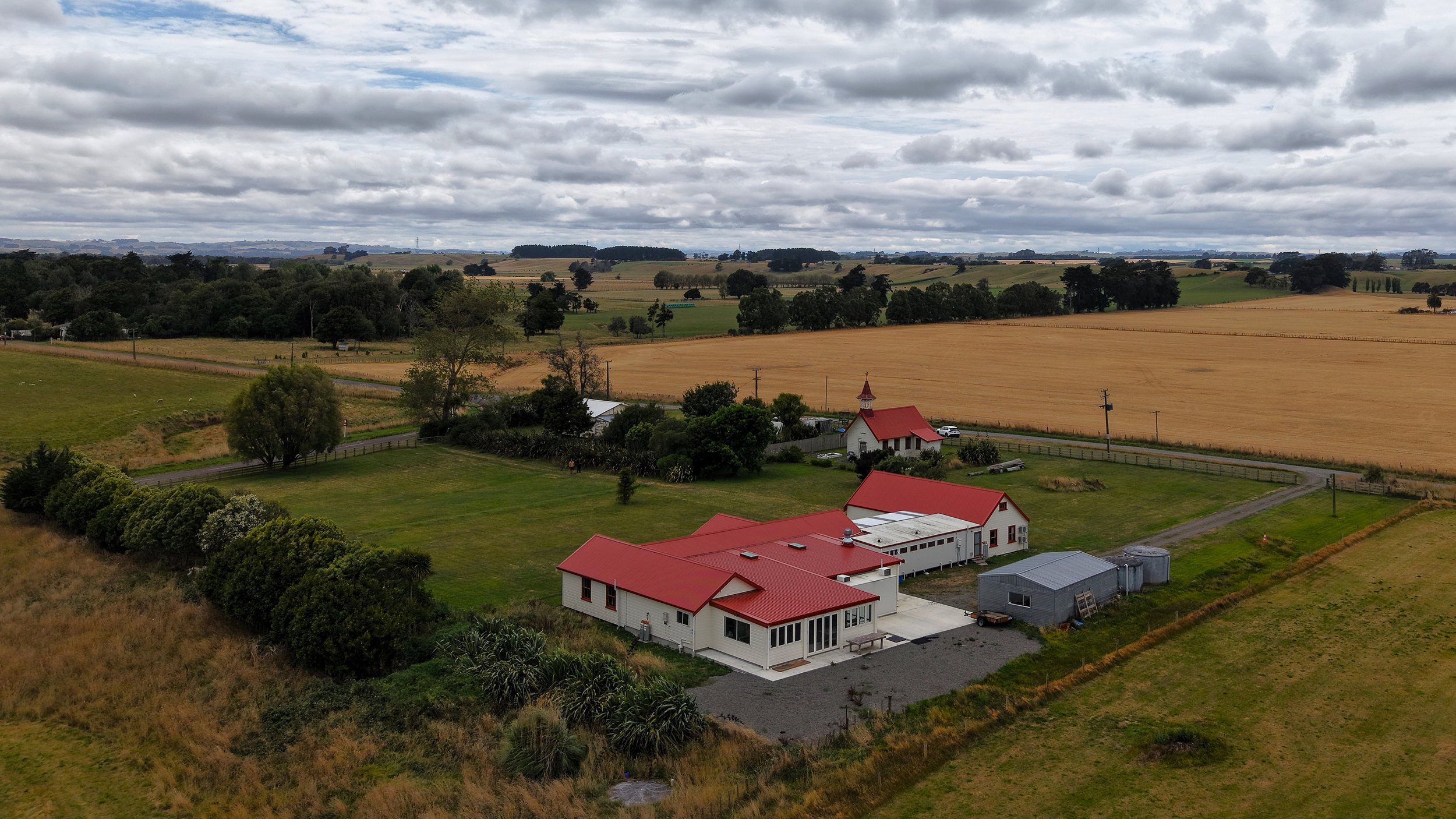
Hītori – Our Story
Many of our pakeke have passed on and the stories and signs they have left behind constitute our hapū truth. We do our best to honour and remember them and keep their stories intact while we rediscover the humble history of the Ngāti Rangatahi, Ngāti Matakore and Ngāti Maniapoto peoples who settled the Rangitĩkei in an area we call Kākāriki.
Our Ngati Rangatahi/Matakore cultural base has developed in Kākāriki over the last 175 years. We identify strongly with the Te Reureu tribes, the Ngāti Raukawa, the Te Ati Awa, Ngāti Toa Confederation, Ngāti Kauwhata, Ngāti Maniapoto, and Ngāti Tūwharetoa. We sit within and identify with the Rūnanga o Raukawa boundaries. So there is a strong kinship feeling to Ngāti Raukawa. There are also strong relationships with Tūwharetoa.
The Matakore marae in Te Reureu is called Te Marae o Hine and it is 3kms down the marae from Te Hiiri marae and perhaps 4.5 kms from Te Tikanga marae, Tokorangi. The marae wharepuni burnt down in the 1960s and many of the taonga were lost in that fire. The wharekai remained, however has fallen into disuse and is used as a hay barn.
Te Hiiri Marae is recognised as the primary Ngāti Rangatahi marae in relation to those tūpuna who returned from Heretaunga under the mana of Te Rangihaeata.
Today, Te Hiiri stands as a living symbol of our enduring whakapapa, cultural resilience, and the deep ties that bind us to the whenua and to each other.
We of the Rangitĩkei are the direct descendants of those tūpuna of Ngāti Rangatahi, Ngāti Matakore and Ngāti Maniapoto iwi who travelled south on the hekenga with Te Rauparaha.
Ngāti Rangatahi came from the Mōkau, Piopio, Āria, Southern Kāwhia area of the King Country, te Nehenehenui. We originally settled the Hutt Valley, Heretaunga, and we are the direct descendants of those Ngāti Rangatahi tūpuna forced off the lands in the Hutt Valley.
From there, we relocated to Kākāriki as instructed by Te Rangihaeata to watch over the Rangitĩkei River. This was confirmed at a meeting at Te Hiiri where Te Rangihaeata’s’ patu and Te Rangitopeoras’ korowai was brought to confirm this history. Te Rangihaeatas’ relationship with Te Pikinga of Ngati Apa/ Whanganui was affirmed at Kākāriki as Ngāti Rangatahi was strategically posted to Miria te kakara, Kākāriki, to act as centurions between living descendants of Ngāti Apa and Ngāti Toa. We of Kākāriki still farm these lands and have kept the ahi kaa since 1845.

Hāto Hōhepa Church kōwhaiwhai.
The Painted Patterns of Saint Joseph’s Church.
Ngā Tohu
– Patterns as Symbols of Unity
Hāto Hōhepa Church was commissioned by a Marist Catholic priest, Fr. Delach SM and blessed by Archbishop Redwood opened on Easter Sunday 1914. It brings together local Māori and Pākehā families of Halcombe and Te Reureu. The materials for the church were provided by Māori hapū from Ōtaki, Whanganui, Tokaanu and locally. The kōwhaiwhai patterns are unique and painted by local Pākehā and Māori parishioners.
Contact Te Hiiri
112 Pryces Line, Halcombe, Manawatu-Wanganui 4779
Trustees secretary: Atiria Reid
Phone: (022) 641 8380
Email: te.reu@xtra.co.nz